№ 01 · Live voice
← All featuresOut loud is how math gets unstuck.
Typing at a chatbot is homework about homework. A session is a conversation — and conversations are where a student says the thing they don't understand out loud for the first time.
7 days free, no card charged.
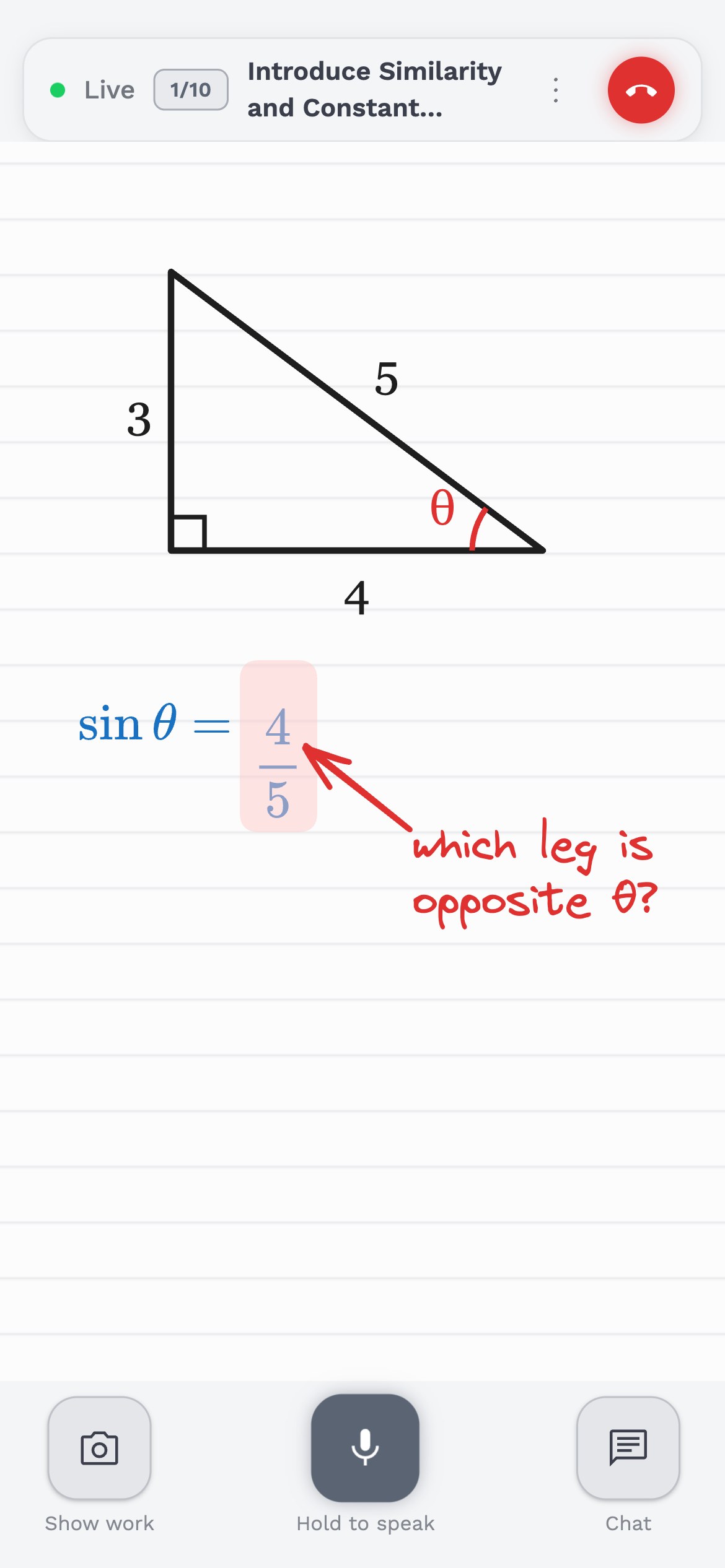
Hold to speak · web, iOS & Android
Short turns, then the floor goes back
A turn is a couple of spoken sentences and then a question. Not because brevity is a style choice, but because a monologue is where attention goes to die, and because the student who has to answer every thirty seconds is the student still in the room at minute twelve.
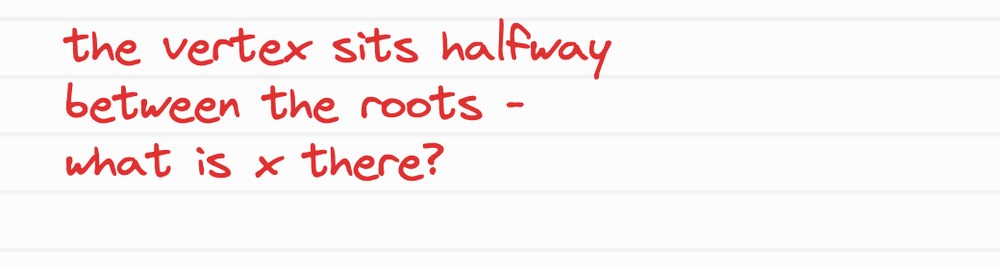
Interrupt it mid-sentence
Your student can cut in with “wait — why did the sign flip?” and the tutor stops talking, answers that, and picks the thread back up. No push-to-talk, no waiting for it to finish a paragraph it has already lost them on. That single behavior is most of what makes it feel like a person.
It hears how they explain it
Reasoning said out loud is different from an answer written down: the hesitation, the “I think”, the step they skip because they never learned it. A tutor works from those signals. A text box never sees them.
A monologue is where attention goes to die. The student who has to answer every thirty seconds is the one still in the room at minute twelve.
Patience is the whole product
Ask the same question five times and it explains it five ways without a sigh, a glance at the clock, or a bill for the extra half hour. For a student who has stopped raising their hand in class, an audience of nobody is the point.
On speed: replies land in under a second in normal use, which is the threshold where a spoken exchange stops feeling like a transaction. We publish that as a behavior rather than a benchmark figure — when we have an end-to-end measurement we're willing to stand behind, we'll print the number and the date we measured it.
The last word
Ready to learn out loud?
Speak, draw, and get unstuck, with a tutor that draws right back.